Mastering Procure-to-Pay
Published on 30 October 2025

Back to News
By Joneil Palenzuela, Senior Advisor – Procurement Office & Professional Advisory
Councils can differ greatly in their procurement maturity. Some councils may be starting out on a journey to improve their procurement function, while others may have been on the journey for numerous years, having reached a greater level of procurement maturity and performance.
Regardless of the size of your council or the size or maturity of the procurement team, there are six key building blocks to enhancing local government procurement. If you structure your procurement improvement efforts around these six blocks, you can develop and execute a simple and practical design to improve procurement capability and enable procurement value within the organisation.
Six Building Blocks to Enhance Local Government Procurement
Primarily, from the 'top down', the right procurement strategy, associated plans and performance measurement methods need to be built to drive the procurement function. The second row of blocks enables a direct link to the wider council organisation through a procurement governance framework and the management of the organisational interface, particularly with internal customers, executives and suppliers. All of this sits upon a foundational layer of people, processes, and technology, built on your council’s core values and guiding principles.
This article will focus on mastering ‘Procure-to-Pay (P2P)’ by revisiting the previous processes, the P2P process and improvements, procurement operations and reporting.
Mastering Procure-to-Pay (P2P)
W. Edwards Deming is widely regarded as the father of Total Quality Management (TQM). His most famous quotes on business process improvement — ‘A bad system will beat a good person every time,’ and ‘If you can't describe what you are doing as a process, you don't know what you're doing’ – still ring true today.
Procure-to-Pay (P2P) is the core operational process in local government procurement, turning strategic plans and governance frameworks into practical service delivery by facilitating financial transactions and driving economic growth. In our Masterclass series, P2P sits within the 5th building block ‘Processes’ and depends on the foundations set by Strategy & Performance, Governance, the Organisational Interface & People, and Technology.
1. Procurement Processes Revisited - S2C feeding P2P
Local government procurement function operates across two end‑to‑end procurement cycles: Source‑to‑Contract (S2C) and Procure‑to‑Pay (P2P) as shown in Figure 2. S2C builds the inputs that make P2P efficient, inclusive of stakeholder identification, clear specifications, risk assessment, supplier engagement and having a contract management plan. Embedding a Procurement & Contract Management Framework (PCMF) within the organisation standardises these inputs or steps and strengthens compliance in a regulated environment.
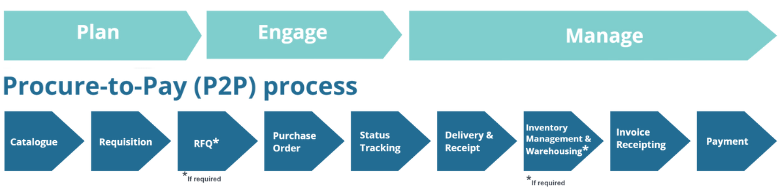
Figure 1. The two key processes of the procurement function in Local Government
READ MORE: Using a framework to ensure consistency and compliance
2. The P2P Process Explained
The P2P process encompasses both contracted and non-contracted expenditure, requiring careful management of risks and benefits to maintain pricing certainty, clear definition of obligations, value for money and ensures a strong audit trail that meets council governance and reporting standards.
Procurement professionals need to apply the Sound Contracting Principles as outlined by legal and regulatory requirements supported by clear local procedures and procurement delegates who may be certified, but most importantly trained in its use.
P2P typically comprises nine steps which is usually resident in various software systems, with RFQ and Inventory applied ‘as required’:
- Catalogue - ERP or punch‑out catalogues linked to contract pricing deliver pricing certainty, obligations clarity, and a strong audit path.
- Requisition - captures requirement details, supplier selection, delivery instructions; routes via delegated approvals in line with policy thresholds.
- RFQ (if required) - obtains competitive written quotes and demonstrates value‑for‑money when catalogue pricing isn’t available.
- Purchase Order (PO) - the binding instrument that integrates requisition, receiving, and payment with agreed T&Cs.
- Status Tracking - PO acknowledgement/response, ASN, delivery dockets; provides schedule visibility and supports expediting.
- Delivery & Receipt - GRNs confirm receipt.
- Inventory Management and Warehousing (if required) - for stock, items move into inventory (materials master) and support MRP/auto‑replenishment.
- Invoice Receipting - AP performs three‑way match (PO ↔ GRN ↔ Invoice) and approves in‑tolerance invoices for payment.
- Payment - remittance advice issued; records closed out per contract or PO terms.
3. Streamlining P2P - Targeted Digitalisation
- Requisition & Approval - catalogue templates, role‑based routing, mobile approvals.
- Contract & Catalogue Management - e‑catalogues tied to contract pricing; alerts for expiries; suggestions of preferred suppliers.
- PO Generation - auto‑POs for low‑value repeatable spend; blanket POs for period contracts.
- Goods Receipt / Service Confirmation - mobile GRNs, barcode/IoT scanning, automated matching.
- Invoice Processing - e‑Invoicing/EDI, OCR + AI, three‑way match enabling Straight‑Through Processing (STP).
- Payment & Reconciliation - scheduled runs, dynamic discounting, bank feeds.
- Analytics & Compliance - spend dashboards, exception‑based workflows, automated reporting.
These improvements align closely with Queensland Audit Office (QAO) recommendations to strengthen internal controls, documentation, and establishment of up-to-date contract registers. Peak Services can provide practical guidance and support on implementing those recommendations.
4) Governance & Probity - RFQ Thresholds and Decision‑Making
Under Local Government Regulation 2012 (s225), councils must invite at least three written quotes for medium‑sized contractual arrangements and accept the most advantageous quote having regard to the sound contracting principles. Encoding these thresholds into a procurement procedure to enable an organisation’s policy with the inclusion of probity controls in P2P workflows protects value‑for‑money and auditability.
5) Procurement Operations Management (POM)
To keep P2P running smoothly day‑to‑day, adopt a clear operations strategy ensuring staff are not overloaded: maintain the procurement pipeline; monitor supplier and contract performance; align operations to regulatory/reporting requirements; and set a cadence for continuous improvement (e.g., agile stand‑ups).
Ensure priorities are communicated across stakeholders so requisitions, approvals, and POs move at pace without sacrificing controls. Refer to graphic introduced in the previous Master Class about the Operational Interface where conceptually, Procurement facilitates and supports the relationship between internal customers and suppliers. It’s not in the middle - it's a strategic enabler of a strong, direct relationship between the two.
Figure 3. Procurement function encompasses both internal and external stakeholders in its delivery.
READ MORE: Using a framework to ensure consistency and compliance
6. Reporting — Performance & Compliance with a Call to Action
Measure what matters and prompt action to deliver:
- Performance — contract outcomes, supplier KPIs, category results, service delivery, risk.
- Compliance — regulatory/policy adherence, PO‑before‑invoice, probity logs, delegation observance.
- Transparency — dashboards and narrative reports that trigger remediation (e.g., catalogue updates, workflow changes, supplier interventions).
Our guidance emphasises policy currency, robust contract registers, and audit‑ready documentation—critical for councils managing public funds.
READ MORE: Simple ways to improve procurement processes
Mastering the Procure-to-Pay process is critical to delivering an efficient and effective procurement function in local government on a daily basis. While strong governance and clear processes and procedures provide the foundation, enabled by procurement team leadership and sufficient resources; it is the strength of relationships with internal stakeholders, executives, and suppliers that determines how effectively procurement operations can deliver value to the organisation.
An effective P2P operation blends automation, clear policies and controls, supplier relationship management, and data driven reporting. Done well, it reduces cost and cycle time, improves compliance, and enhances community outcomes. Peak’s masterclasses and articles are designed to help Queensland councils build capability across the procurement lifecycle.
Register for our last procurement masterclass here
If you would like any further information or support in mastering Procure- to- Pay in your Council, please contact Joneil Palenzuela, Senior Advisor, Procurement Advisory services: E jpalenzuela@wearepeak.com.au M 0437 421 748.
READ MORE